This Is Why Pompeii’s Hidden Courtyards Are Pure Instagram Gold
You know that feeling when history and beauty collide in the most unexpected way? Walking through Pompeii, I wasn’t just stepping on ancient stones—I was discovering open-air lounges frozen in time. Sun-drenched atriums, ivy-kissed archways, and quiet garden nooks weren’t just remnants of the past—they felt like curated backdrops waiting for a photoshoot. Who knew ruins could be this stylish? This is more than a day trip; it’s a visual journey through leisure, life, and light. The air hums with stillness, yet every corner pulses with the echoes of daily life once lived under Mediterranean sun. Here, ancient design meets modern aesthetic longings in a way few archaeological sites can match. Pompeii, preserved beneath volcanic ash, offers not only a glimpse into Roman domestic life but also an uncanny reflection of our own desire for beauty, balance, and tranquility.
First Glimpse: When Ancient Ruins Feel Like a Modern Escape
Arriving at the entrance of Pompeii, the sheer scale of the site unfolds gradually, like a scroll being unrolled across the hills of southern Italy. The path winds past reconstructed signage and a well-organized visitor center, but the moment you step past the ancient city gates, time shifts. The modern world recedes—no honking cars, no billboards, just the soft crunch of volcanic stone underfoot and the whisper of wind through olive trees. What strikes most is not just the preservation, but the intentionality behind the layout. Homes are not haphazardly arranged; they follow geometric precision, with wide streets intersecting at right angles and public spaces positioned for both function and beauty.
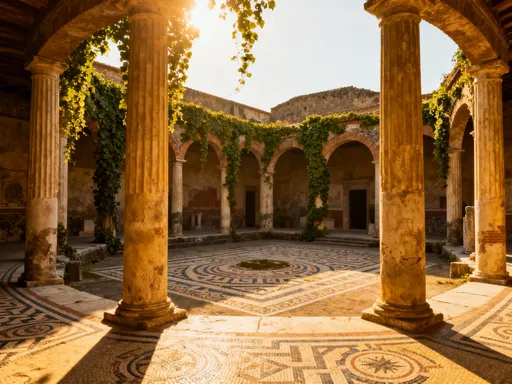
Even in ruins, the harmony of design is evident. Atriums open to the sky, their rectangular pools reflecting the sun like mirrors. Mosaics line the floors—some depicting playful dolphins, others mythological scenes rendered in tiny, colorful tesserae that have withstood centuries. These are not merely decorative; they are evidence of a culture that valued aesthetic pleasure as part of everyday life. The interplay of light and shadow across these spaces creates a dynamic visual rhythm—bright midday sun casts sharp lines across colonnades, while late afternoon gilds the crumbling walls in gold.
What makes Pompeii feel so unexpectedly modern is the way its spaces invite presence. Unlike some historical sites that feel distant or austere, Pompeii’s courtyards are human-scaled, intimate. You can almost imagine reclining on a stone bench with a cup of herbal tea, reading beneath a vine-covered pergola. The silence amplifies small details—the texture of weathered stucco, the way wildflowers sprout between flagstones, the soft echo of footsteps in an empty hall. This is not a monument built for spectacle, but a city designed for living. And in that, it resonates deeply with today’s longing for spaces that nurture both the eye and the spirit.
The Heart of Leisure: Courtyards and Gardens as Ancient Living Rooms
At the core of every well-to-do Pompeian home stood the atrium—a central, open-roofed courtyard that functioned as the home’s social and emotional heart. Rainwater would collect in an impluvium, a shallow pool that cooled the air and reflected light into surrounding rooms. This was not just practical engineering; it was a deliberate design choice to bring nature indoors, to create a breathing space within the home. Around it, rooms fanned out like petals—dining areas, bedrooms, and reception halls—each oriented to take advantage of light and airflow.
Beyond the atrium, many homes featured a peristyle garden—a colonnaded courtyard often larger and more ornamental. These were the ancient equivalent of today’s outdoor living rooms. Imagine shaded walkways lined with slender columns, surrounding a garden filled with fragrant herbs, flowering shrubs, and small fountains. Archaeological evidence shows that families cultivated roses, myrtle, and laurel, not just for beauty but for their symbolic meanings—love, purity, victory. Statues of gods or household deities watched over these spaces, adding a spiritual dimension to daily relaxation.
These gardens were not private retreats in isolation; they were stages for social life. Families dined al fresco, hosted guests, and even held small performances. Frescoes from homes like the House of the Faun depict banquets under trellises, with musicians playing and servants offering wine. The Romans understood the psychological benefits of green space long before modern science confirmed them. Being surrounded by plants, water, and natural light lowered stress and elevated mood—a principle we now call biophilic design, but one they practiced intuitively.
What’s striking is how little has changed in our desires. Today’s homeowners seek patios with string lights, potted plants, and water features that echo the very elements found in Pompeii. The peristyle garden, with its blend of structure and softness, order and organic life, remains a timeless model for outdoor living. Walking through these spaces, one doesn’t feel like a tourist gazing at relics, but a guest stepping into a home where leisure was not an indulgence, but a daily ritual.
Photogenic Spots You Can’t Miss (And How to Shoot Them Right)
For those drawn to visual storytelling, Pompeii offers an abundance of naturally composed scenes. The House of the Vettii, once owned by two wealthy freedmen, is a standout. Its garden courtyard is framed by red-painted columns and dotted with restored planters, creating a vivid contrast against the sky. Stand at the edge of the portico and look inward—the symmetry draws the eye straight to the central fountain, now dry but still evocative. Shoot during late morning when the sun angles across the columns, casting long, dramatic shadows that enhance depth and texture.
The Forum, once the city’s civic and religious center, offers a different kind of grandeur. Its colonnaded walkways provide natural framing for photographs. Position yourself near the Temple of Jupiter and pan across the open square—on a clear day, Mount Vesuvius looms in the distance, a silent reminder of the catastrophe that preserved this city. The interplay between ancient stone and distant mountain creates a layered composition, rich with narrative potential. Early afternoon light bathes the white limestone in warmth, making it ideal for capturing architectural details.
Another compelling location is the Central Baths, where open halls and vaulted ceilings create a sense of spaciousness. The men’s and women’s sections, though partially ruined, retain their original layout, with mosaic floors and niches that once held oil lamps. The high windows allow shafts of light to cut through the interior, illuminating dust motes and textured walls. This is a place of atmosphere—shoot wide to capture the scale, or zoom in on fragments of painted plaster that still cling to the walls in faded blues and ochres.
Don’t overlook the smaller streets—Via dell’Abbondanza, for instance, lined with shops and homes, offers intimate vignettes. Look for doorways framed by volcanic stone, their thresholds worn smooth by centuries of footsteps. A single vine creeping over a broken arch can become the focal point of a powerful image. The key is patience: wait for a beam of light to strike just right, or for a fellow visitor to pause in silhouette, adding scale and life to the scene. These are not staged sets, but real spaces where history and beauty coexist naturally.
Beyond the Main Path: Quiet Corners That Feel Like a Secret
While the main thoroughfares of Pompeii draw the majority of visitors, those who wander further discover a different kind of magic. The southern residential district, less restored and less trafficked, feels more like a time capsule. Here, homes are not fully excavated, their walls only partially standing, yet this incompleteness adds to their charm. Nature has reclaimed much of the space—ivy drapes over broken columns, fig trees grow from rooftops, and moss softens the edges of ancient stairs. These are not manicured gardens, but living ruins, where decay and beauty coexist in perfect balance.
One such spot lies behind the Temple of Apollo, near the intersection of Via Stabiana and a narrow lane that leads toward the city walls. Few tourists venture this far, and the silence is profound. You can hear birdsong, the rustle of leaves, the distant murmur of a tour guide’s voice fading into the distance. A collapsed wall reveals a mosaic fragment still intact, half-buried but glowing with color. Another corner holds a forgotten fountain, its basin cracked but still holding a shallow pool after rain. These are the moments that feel personal, as if you’ve stumbled upon something meant only for you.
Another hidden gem is the area near the Villa of the Mysteries, especially in the early evening when most day-trippers have left. The path curves gently, lined with cypress trees that sway in the breeze. The villa itself is famous for its enigmatic frescoes, but the surrounding garden terraces offer panoramic views of the surrounding countryside. Sit on a low wall here, and you’re not just observing history—you’re experiencing it. The air cools, the light turns amber, and the sense of connection to the past deepens. These quiet zones remind us that beauty often lies not in perfection, but in imperfection—where time has softened edges and allowed nature to collaborate with human creation.
Exploring these lesser-known areas requires no special access, just a willingness to stray from the marked routes. Wear comfortable shoes, carry water, and allow yourself to wander without a strict agenda. Some of the most memorable images come not from famous landmarks, but from accidental discoveries—a shaft of light through a broken roof, a cat sunning itself on a marble step, a single rose blooming in an abandoned courtyard. These are the unplanned moments that make Pompeii feel alive, not frozen.
Leisure Then vs. Leisure Now: Drawing the Lifestyle Parallel
The Romans of Pompeii had a sophisticated understanding of downtime. Their daily rhythm included the midday bath, a ritual that combined hygiene with socializing and relaxation. The thermal baths were not merely functional; they were designed for pleasure, with heated rooms, cold plunge pools, and open-air courtyards where people strolled and conversed. This was leisure as a civic value, not a luxury. Similarly, the practice of otium—the cultivated enjoyment of free time—was central to Roman philosophy. It wasn’t idleness, but purposeful rest: reading, walking in gardens, hosting philosophical discussions.
Today, we seek similar experiences, though we name them differently. We visit spas, join yoga classes, gather at cafés with friends, or spend weekends tending to our gardens. The desire to slow down, to be present, to find beauty in the ordinary—these are not modern inventions, but enduring human needs. Pompeii’s courtyards mirror our own urban oases: rooftop terraces, community gardens, quiet park benches tucked beneath trees. The difference is not in intent, but in context. We use smartphones and headphones; they used scrolls and lyres. But the goal remains the same—to create moments of peace within the rhythm of daily life.
Even the way we use these spaces for connection has not changed. The Roman cena, or dinner party, held in the garden under shaded pergolas, finds its echo in today’s al fresco dining and backyard gatherings. The emphasis on shared meals, conversation, and ambient atmosphere shows a continuity of values. And just as they decorated their homes with frescoes and mosaics to reflect personal taste, we curate our living spaces with art, plants, and lighting to express identity and comfort.
Pompeii, then, is not just a window into the past, but a mirror. It reflects our own aspirations for balance, beauty, and meaningful rest. The fact that we photograph these spaces so eagerly—sharing them on social media, printing them as wall art—suggests a deep recognition. We are not merely documenting ruins; we are claiming inspiration. The ancient world, in its quiet courtyards and sunlit gardens, offers a blueprint for living well—one that feels surprisingly relevant in our fast-paced, often overwhelming modern lives.
Planning Your Visit: Timing, Tickets, and Smart Moves
Visiting Pompeii requires a bit of strategy to fully appreciate its quieter, more photogenic moments. The best times to arrive are early in the morning, right when the site opens, or in the late afternoon, about two hours before closing. Midday brings both crowds and harsh sunlight, making photography difficult and the experience less serene. Mornings offer soft, diffused light and the chance to walk through the city before tour groups arrive in full force. By late afternoon, the golden hour transforms the ruins, casting warm, flattering tones across stone and archways.
Tickets should be purchased in advance through the official Parco Archeologico di Pompei website. This avoids long lines and ensures entry, especially during peak seasons like spring and early autumn. The standard ticket includes access to the main site and the on-site museum, which houses many of the artifacts found during excavations—frescoes, household items, and casts of victims. Consider adding a guided audio tour, which provides context without requiring you to follow a group.
A recommended walking route begins at the Porta Marina entrance, leading you directly to the Forum. From there, follow Via dell’Abbondanza eastward, passing bakeries, shops, and the Lupanar (an ancient inn, notable for its preserved frescoes, though modest in scale). Turn south toward the House of the Vettii and the Villa of the Mysteries, then loop back toward the Stabian Baths and the amphitheater. This route covers major highlights while allowing room for detours into quieter residential areas.
Comfort is key. Wear breathable clothing and sturdy walking shoes—some paths are uneven, and there is limited shade. Bring a wide-brimmed hat, sunscreen, and at least one liter of water per person. While there are small kiosks selling drinks and snacks, options are limited. The visitor center near the entrance has restrooms, seating, and a shaded courtyard where you can pause and orient yourself. If you plan to stay several hours, pack light refreshments and take breaks to avoid fatigue. With thoughtful planning, your visit can be as restorative as it is enlightening.
Why This Ancient City Feels So Alive Today
More than any other archaeological site, Pompeii feels personal. It doesn’t tower over you with imperial grandeur like the Colosseum, nor does it whisper mystery like the catacombs. Instead, it invites you in—into homes, gardens, shops, and streets where ordinary life once unfolded. You see the marks of daily routines: a dog’s paw print fossilized in plaster, a child’s scribble on a wall, a wine stain on a dining table. These small traces make the past feel immediate, not distant.
What makes the experience so powerful is the combination of visual beauty and emotional resonance. The courtyards, with their symmetry and greenery, appeal to our aesthetic sense. But they also speak to something deeper—the universal human need for rest, for connection, for spaces that feel like sanctuary. In a world where urban environments often feel cold and impersonal, Pompeii offers a counterpoint: a city built with care, where even modest homes had light-filled atriums and private gardens.
This is why so many visitors leave feeling inspired, not just informed. They see in these ruins a model for how we might design our own lives and spaces—slower, more intentional, more attuned to nature and beauty. The fact that these courtyards now thrive as Instagram backdrops is no accident. They satisfy a modern craving for authenticity, for places that feel real and meaningful, not manufactured.
Pompeii’s hidden courtyards are more than archaeological features. They are testaments to a way of living that valued leisure, beauty, and community. They remind us that relaxation is not a modern luxury, but a timeless necessity. And in their quiet, sunlit stillness, they offer a simple yet profound invitation: to slow down, to look closely, and to find wonder in the everyday. This is not just a city preserved in ash—it is a living lesson in how to live well, even now, nearly two thousand years later.