Where Art Meets Flavor: Lagos’s Culinary Canvas
Lagos isn’t just Nigeria’s heartbeat—it’s a living gallery where every meal is a masterpiece. I didn’t expect my taste buds to become art critics, but here, food isn’t just eaten; it’s experienced. From vibrant street markets to bold flavors dancing on handmade plates, the city blends creativity and cuisine like nowhere else. This is more than dining—it’s cultural expression, served hot. The rhythm of the city pulses through its markets, kitchens, and streets, where flavor and form converge in unexpected harmony. To walk through Lagos is to wander through an open-air museum where the senses are constantly invited to engage, explore, and celebrate.
The Soul of Lagos: Art and Appetite in Motion
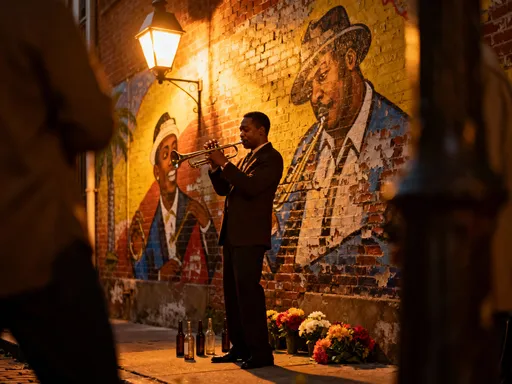
Lagos is a city that refuses to stand still, and its creative spirit flows through every corner, from the graffiti-strewn walls of Yaba to the curated exhibitions in Surulere’s community art spaces. This is a place where art is not confined to galleries—it spills onto sidewalks, rides on the sides of danfo buses, and echoes in the drumbeats of street performances. What makes Lagos truly unique is how seamlessly its culinary culture mirrors this artistic energy. In neighborhoods like Ikoyi and Mushin, murals depicting ancestral figures stand beside food stalls where chefs stir pots with the same intensity as painters wielding brushes. The city’s visual and gastronomic landscapes are not parallel—they are intertwined, each feeding the other with color, rhythm, and meaning.
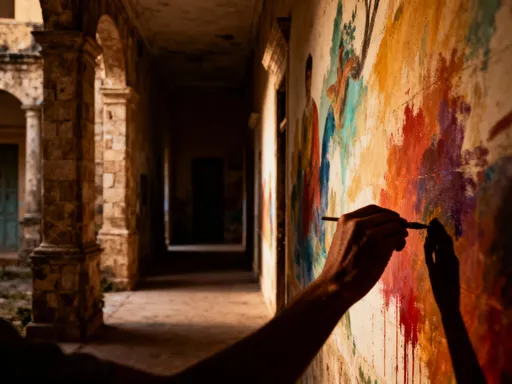
Art in Lagos is not reserved for the elite; it is a public dialogue, a way of reclaiming space and identity. Similarly, food here is never just sustenance—it tells stories of migration, resilience, and celebration. A plate of jollof rice might carry the memory of a family reunion, while a bowl of efo riro could echo generations of women cooking over open fires. The city’s artists and cooks share a common language: one of improvisation, boldness, and deep respect for tradition. In both cases, the process is as important as the result. Watching a muralist layer paint onto concrete is not so different from observing a vendor slow-cook pepper soup for hours, adjusting the heat and seasoning with quiet precision.
What emerges is a culture where creativity is not an event but a way of life. Whether it’s a dancer moving to the beat of a talking drum or a cook shaping dough for puff puff, the act of making is an expression of presence and pride. This fusion is most visible in cultural hubs like the Rele Gallery or the Nike Art Centre, where visitors can sip palm wine while watching live painting sessions—only to realize that the snacks served alongside are just as carefully crafted as the artwork on display. In Lagos, the boundary between artist and cook, between gallery and kitchen, is beautifully blurred.
Taste as a Sensory Art Form
In Lagos, eating is never a passive act. Every meal is an invitation to engage all five senses, transforming dining into a form of sensory art. Nigerian cuisine, at its core, is about transformation—taking simple, local ingredients and elevating them through technique, tradition, and care. Dishes like pounded yam with egusi soup or amala with ewedu are not just meals; they are performances of patience and skill. The rhythmic pounding of yam in a wooden mortar, the slow simmering of leafy greens, the careful balancing of spices—each step is a deliberate gesture, much like a sculptor shaping clay or a musician tuning an instrument.
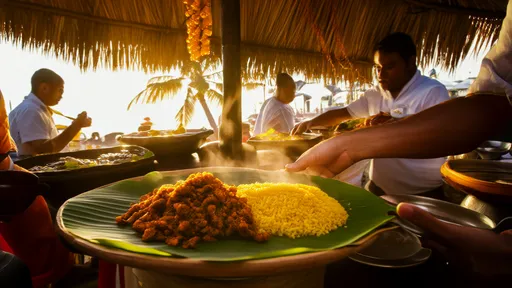
Consider the iconic jollof rice, a dish so beloved it sparks friendly rivalry across West Africa. In Lagos, it is more than a staple—it is a canvas. The rice is cooked in a rich blend of tomatoes, onions, and peppers, its deep red hue resembling a sunset over the lagoon. The aroma alone—smoky, slightly sweet, with a hint of heat—draws people in long before the first bite. When served, it is often garnished with slices of hard-boiled egg, fried plantain, or a sprinkle of fresh herbs, turning the plate into a study in color and contrast. The texture matters too: the rice must be tender but not mushy, each grain infused with flavor, much like a well-composed painting where every element has its place.
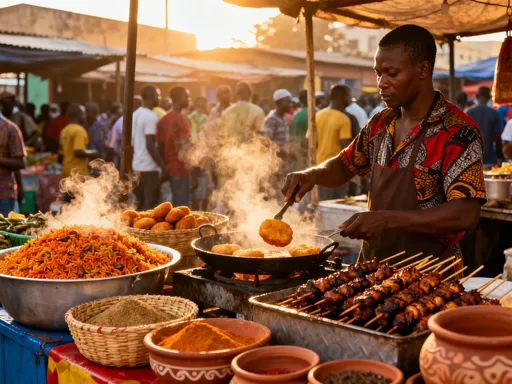
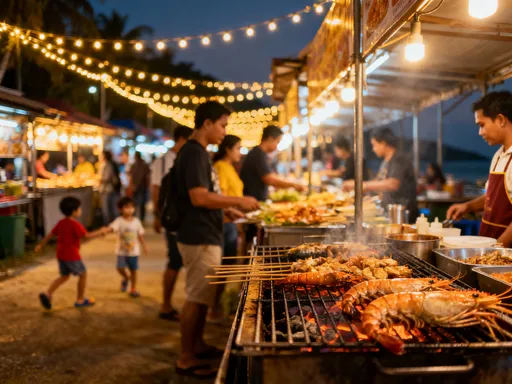
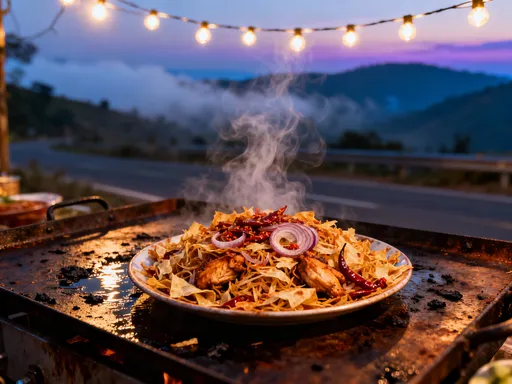
Suya, the spicy grilled meat skewer found on nearly every street corner, is another example of culinary artistry. The magic begins long before the fire is lit. The meat is marinated in a blend of ground peanuts, pepper, and spices known as yaji, then carefully threaded onto sticks and grilled over open flames. The sizzle, the smoke, the charred edges—all contribute to an experience that is as visual and auditory as it is gustatory. Watching a suya vendor fan the coals, flip the skewers, and season them with a practiced hand is like witnessing a live cooking performance, where timing and instinct are everything. The final product is not just food; it is a testament to craftsmanship, served on a piece of foil like a small, edible masterpiece.
Markets as Living Galleries
To walk through Lagos’s major markets—Mile 12, Oyingbo, or Oshodi—is to step into a living exhibition of abundance, color, and human ingenuity. These are not mere places to buy food; they are immersive environments where commerce and artistry coexist. Stalls are arranged with an almost instinctive sense of composition: pyramids of ripe plantains glow in golden light, baskets of dried fish are stacked like sculptures, and mounds of spices create vivid gradients of red, yellow, and brown. The air hums with energy—vendors call out prices, children weave through the crowd, and the scent of fresh produce and grilled snacks fills every breath.
What sets these markets apart is the care with which food is presented. A woman selling peppers might arrange them in concentric circles, their bright red and green hues forming a natural mosaic. Another vendor may display her moi moi—steamed bean pudding—in banana leaves folded like origami, each parcel a small, green-wrapped gift. Even the containers are part of the aesthetic: hand-carved wooden bowls, woven raffia baskets, and calabash gourds are used not just for function but for beauty, connecting the present to ancestral traditions. These displays are not accidental; they reflect a deep understanding of visual appeal and pride in one’s work.
The market is also a space of storytelling. A sack of yams isn’t just produce—it represents a farmer’s labor, a season’s harvest, a family’s livelihood. When a vendor gestures proudly toward her display, she is not just selling; she is sharing a piece of her world. In this way, the market becomes a gallery of lived experience, where every item has a history and a meaning. For the visitor, the lesson is clear: to see food as art is to recognize the human hands behind it, the time invested, and the culture embedded in every detail.
Street Food: The People’s Performance Art
If Lagos’s markets are galleries, then its street food vendors are the city’s most accessible performers. Found on nearly every corner, these cooks operate in open-air kitchens, turning simple ingredients into daily masterpieces. Their work is choreographed—every movement efficient, rhythmic, and precise. Watch a woman fry akara, golden bean fritters that puff up in hot oil. She scoops the batter with a worn ladle, pours it in perfect circles, and flips each one with a flick of the wrist. There is grace in the repetition, a kind of culinary ballet that unfolds in the heat of the afternoon sun.
These vendors are not just feeding people—they are entertaining, engaging, and connecting. A suya seller might crack jokes with regular customers while grilling meat, creating a sense of community around the fire. A man selling agege bread with canned fish will slice the loaf with surgical precision, layer the filling just so, and hand it over with a smile that says, “This is good. You’ll like it.” These interactions are part of the experience, turning a quick snack into a moment of human warmth. The street kitchen is democratic—everyone is welcome, and every meal is served with dignity.
The tools of the trade add to the performance. A single gas burner, a dented pot, a wooden spoon—these humble items become instruments in the hands of skilled cooks. The sound of boiling soup, the crackle of frying plantains, the clink of metal bowls—all form a soundtrack to the city’s daily life. For those who take the time to observe, these small acts of creation are deeply moving. They remind us that art does not require a stage or a frame; it can happen on a sidewalk, under a tarpaulin, with nothing but fire, flavor, and heart.
Fusion Through Craft: When Tradition Meets Innovation
While Lagos honors its culinary roots, a new generation of chefs and artists is reimagining what Nigerian food can be. In neighborhoods like Lekki and Victoria Island, contemporary eateries are emerging as cultural laboratories, where tradition is not discarded but reinterpreted. These spaces often double as art venues, hosting live painting sessions, poetry readings, or jazz nights alongside carefully plated dishes. Here, a bowl of egusi soup might be served in a hand-thrown ceramic bowl, garnished with microgreens and presented like a modern sculpture. A classic dish like ofada rice is paired with artisanal hot sauces and served alongside a rotating exhibit of local photography.
What makes these restaurants special is their commitment to dialogue. They do not treat food as isolated from culture; instead, they position it as part of a broader creative conversation. A chef might collaborate with a textile artist to design napkins inspired by traditional adire patterns, or work with a musician to create a playlist that complements the flavors of the menu. These experiences are not about pretension—they are about deepening connection, inviting diners to see, hear, and taste Nigerian heritage in new ways.
One such space is Terra Kulture, where guests can attend a cooking class in the afternoon and an art exhibition in the evening—all under the same roof. Here, the kitchen is open, allowing visitors to watch as chefs prepare dishes with the same focus as sculptors shaping clay. The ingredients are sourced locally, and the recipes are rooted in family traditions, but the presentation is modern, thoughtful, and visually striking. This blend of old and new reflects a larger truth about Lagos: that innovation does not mean erasure. Instead, it means evolution—finding fresh ways to honor what came before.
The Role of Community in Culinary Creation
In Lagos, food is rarely a solitary act. Meals are shared, often from a single large plate placed at the center of a table or on the floor. This practice is more than practical—it is symbolic. Eating together reinforces bonds, invites conversation, and turns dining into a collective experience. Family gatherings, church events, and neighborhood celebrations all revolve around food, with dishes passed from hand to hand and stories flowing as freely as palm wine. The kitchen is often the heart of the home, where aunts, cousins, and grandparents gather to chop, stir, and reminisce.
This communal spirit extends beyond the home. During festivals like Christmas or Eid, entire streets come alive with the smell of roasting meat and spiced rice. Neighbors exchange dishes, sampling each other’s versions of jollof or moi moi, offering praise and playful critique. These moments are not just about taste—they are about belonging. Just as a mural is painted for the public to enjoy, a meal is prepared not just for one person but for many. The idea that “no dish is made alone” runs deep in Lagosian culture. Even a street vendor relies on a network—farmers, spice traders, fuel suppliers—all contributing to the final product.
This sense of interdependence mirrors the way art is created in the city. A dancer needs drummers, a painter needs a wall, a poet needs an audience. In the same way, a cook needs ingredients, tools, and, most importantly, people to share the meal with. Food, like art, is a social act—one that strengthens community, preserves memory, and celebrates life. In Lagos, to cook is to give; to eat is to receive; and to share is to belong.
How to Experience Lagos’s Art-Cuisine Blend Like a Local
For visitors, engaging with Lagos’s culinary-artistic culture requires more than a camera or a full stomach—it demands presence, respect, and curiosity. Start by visiting local markets, but go beyond snapping photos. Take time to talk to vendors, ask about their ingredients, and learn the names of dishes you’ve never tried. Many will happily explain how they prepare their food or share stories about their families. If possible, join a cooking workshop, where you can learn to pound yam, grind peppers, or wrap moin moin in banana leaves. These hands-on experiences offer a deeper understanding of the skill and tradition behind the cuisine.
Seek out spaces where art and food intersect. Attend a cultural event at the Pan-Atlantic University’s art center, or visit a pop-up dinner hosted by a local chef in collaboration with visual artists. Support artist-run cafés or social enterprises that train young people in both culinary and creative skills. These initiatives not only provide delicious meals but also contribute to the city’s cultural ecosystem. When dining, resist the urge to rush. Sit longer, observe the surroundings, and let the flavors unfold slowly. Notice the texture of the food, the way it’s presented, the way people interact around you.
Most importantly, approach the experience with humility. Lagos is not a performance for tourists—it is a living, breathing city shaped by generations of creativity and resilience. To truly see the art in its cuisine is to recognize the dignity in everyday acts: a woman frying akara at dawn, a family sharing a meal on a Sunday afternoon, a chef plating a dish with quiet pride. These are not spectacles; they are moments of beauty, woven into the fabric of daily life. Come not as a spectator, but as a participant. Come hungry, stay curious, and leave with a deeper appreciation for how art and flavor can come together in the most unexpected ways.
In Lagos, every meal is a brushstroke on a larger canvas. To taste here is to witness art in motion—raw, real, and rhythmically alive. This city doesn’t just feed you; it makes you feel part of something beautiful. Come hungry, leave inspired.