You Won’t Believe the Art Hidden in Uluru’s Red Sands
Standing beneath Uluru at sunset, I felt the land breathe. The rock glowed like fire, and suddenly, the art around me made sense—not just paintings, but stories carved by culture, color, and time. What I discovered wasn’t just beauty—it was meaning. From hand-stenciled caves to handmade crafts pulsing with ancestral energy, Uluru’s artistic soul goes far beyond the surface. This is more than sightseeing—it’s connection. The vast red desert may appear silent at first glance, but those who pause to look closely hear echoes of creation, rhythm in the patterns, and reverence in every brushstroke. In this journey through one of Earth’s most sacred landscapes, we uncover not only what the art looks like—but why it exists, how it endures, and how it invites us to see the world differently.
The Living Canvas: Uluru as a Natural Work of Art
Uluru is not merely a geological formation—it is a living canvas, painted anew each day by the sun’s passage. At dawn, the monolith emerges from shadow in soft lavender hues, its surface rippling with subtle gradients. As morning light climbs, the stone warms into deep amber, then ignites into a fiery crimson by midday. But it is at sunset that Uluru reveals its full drama, glowing like molten earth against a cooling sky. This transformation is not accidental; it is part of a natural rhythm observed and honored by the Anangu people for thousands of years. They do not see Uluru as a monument to be admired from afar, but as a sacred presence—a relative, even—that communicates through color, temperature, and silence.
The texture of Uluru adds another layer to its visual language. Wind-sculpted grooves, ancient water channels, and shadowed crevices form a topography rich with meaning. These features are not random; many correspond to Tjukurpa (Dreaming) stories, the foundational spiritual beliefs of the Anangu. Every fissure, overhang, and ledge has a name and a narrative tied to ancestral beings who shaped the land during creation time. To walk near Uluru is to move through a three-dimensional storybook, where the environment itself serves as both archive and oracle. Visitors often describe an almost physical sensation when standing close—something between awe and humility—as if the rock remembers everything it has witnessed.
Photographs capture Uluru’s beauty, but they cannot convey its presence. On still nights, the air hums with quiet, broken only by the whisper of wind across sandstone. The absence of city lights allows the stars to blaze overhead, connecting the earthly artwork below with the celestial patterns above. For the Anangu, this continuity between sky and stone is essential—it reflects a worldview in which all elements of nature are interwoven. Travelers who come seeking only a photo opportunity may leave disappointed, but those who come to listen often find themselves changed. The true artistry of Uluru lies not just in what we see, but in how it makes us feel: small, yet included; temporary, yet connected.
Ancient Murals and Storytelling Through Rock Art
Scattered throughout the Uluru-Kata Tjuta National Park are shelters and caves adorned with rock art that dates back millennia. These are not decorative additions to the landscape—they are records of survival, spirituality, and identity. Found in protected overhangs such as those at Mutitjulu Waterhole, these artworks use natural pigments to depict ancestral beings, animal tracks, and ceremonial scenes. Unlike Western art traditions that often separate artist and viewer, Uluru’s rock art functions as both instruction and invocation. Each image carries knowledge—where water can be found, which plants are safe to eat, how to conduct rituals properly—and must be interpreted with care and context.
Common symbols recur across many sites, forming a visual language passed down through generations. Concentric circles often represent waterholes or meeting places, while wavy lines indicate journeys or snake tracks. Animal footprints—kangaroo, emu, goanna—are rendered with precision, not just for identification but to teach tracking skills vital for life in the desert. Human figures appear in ceremonial attire, sometimes holding tools or engaged in dance. Hand stencils, created by blowing pigment around a hand pressed against the rock, are among the most poignant. They serve as signatures, markers of presence: “I was here. I belong.” Some of these prints are believed to be over a thousand years old, yet they remain startlingly vivid, preserved by the dry climate and careful stewardship.
Preservation is a central concern. The pigments used—primarily ochres in red, yellow, white, and black—are derived from minerals found locally and mixed with water or animal fat. While durable, they are vulnerable to touch, moisture, and erosion. For this reason, visitors are asked to stay on designated paths and refrain from touching any surfaces. Flash photography is discouraged, and some sites are closed to the public entirely to prevent damage. Rangers and Anangu custodians monitor conditions regularly, ensuring that these irreplaceable works survive for future generations. Respectful observation is not just encouraged—it is required. When you view rock art here, you are not a tourist. You are a guest.
The Artists Behind the Vision: Connecting with Anangu Creativity
The Anangu people are the traditional owners of Uluru and the surrounding region, and their role extends far beyond land management—they are living artists, educators, and storytellers. Art is not a separate profession among the Anangu; it is woven into daily life, spiritual practice, and intergenerational learning. Children grow up watching elders paint, carve, and weave, absorbing techniques and meanings simultaneously. Stories told during creation of art ensure that knowledge is not lost. In this way, artistic expression becomes a vessel for cultural continuity, especially in the face of historical disruption and colonization.
Today, many Anangu artists work through community cooperatives such as Maruku Arts, which supports over 900 artists across central Australia. These organizations provide materials, exhibition opportunities, and fair compensation, ensuring that creative work remains sustainable. More importantly, they maintain control over how art is shared and interpreted. Unlike commercial galleries that may misrepresent Indigenous art as mere decoration, these collectives emphasize context—each piece comes with a story, often recorded in both Pitjantjatjara and English. This allows buyers to understand not just what they are purchasing, but why it matters.
Cultural centers near Uluru, such as the Cultural Centre at the Uluru-Kata Tjuta National Park, offer visitors a chance to learn directly from Anangu voices. Guided tours, storytelling sessions, and hands-on workshops create space for dialogue rather than extraction. One elder once explained, “We don’t ‘show’ our culture. We share it—with respect.” This distinction is crucial. When travelers engage authentically, they move beyond passive consumption and enter into mutual understanding. The art, then, becomes a bridge—not just between past and present, but between people.
From Sand to Sculpture: Traditional Materials and Techniques
Anangu art draws deeply from the land, using materials gathered with reverence and purpose. Ochre pigments, sourced from specific sites known only to elders, are ground into fine powder and mixed with natural binders. Red ochre, symbolizing blood and life force, is particularly significant. Yellow and white ochres come from clay deposits, while black is made from charcoal or manganese. These colors are not chosen for aesthetic appeal alone—they carry symbolic weight and are used according to cultural protocols. Applying pigment is an act of responsibility, not improvisation.
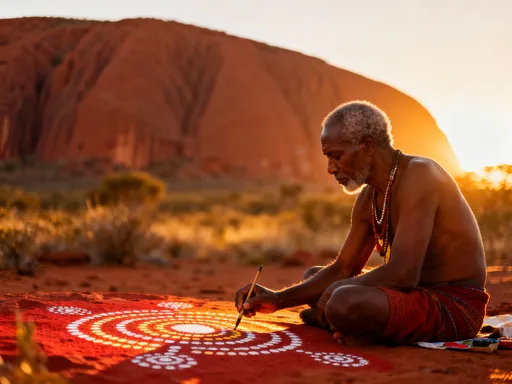
One of the most recognized techniques is dot painting, which emerged in the 1970s as a way to share sacred stories while protecting sensitive information. Dots obscure certain details, allowing public display without revealing secret knowledge. The patterns themselves mimic elements of the desert—sand dunes, star fields, raindrops—and require immense patience and precision. Artists use sticks, brushes, or even sharpened twigs to apply thousands of individual dots, sometimes taking weeks to complete a single piece. Each movement is deliberate, guided by memory and tradition.
Beyond painting, carving and weaving are equally important. Wooden sculptures, often made from eucalyptus or mulga trees, depict ancestral beings or animals. These are not carved for sale alone—they may be used in ceremonies or passed down within families. Fiber art, including baskets and mats, uses spinifex grass, which is harvested sustainably and treated with resin to strengthen it. The process involves singing traditional songs during preparation, reinforcing the connection between creation and culture. Every material, every method, reflects a deep ecological wisdom: take only what is needed, honor the source, and give back through care and ceremony.
Where to Find Authentic Specialty Art Products
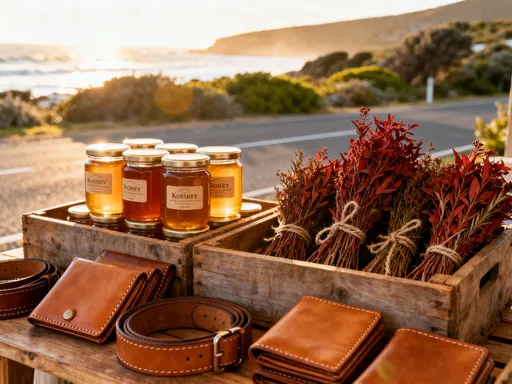
For travelers wishing to bring home a meaningful memento, knowing where to shop is essential. The most reliable places to purchase authentic Anangu art are official outlets such as the Maruku Arts Gallery at the Cultural Centre or the markets at nearby resort towns like Yulara. These venues guarantee that proceeds go directly to artists and communities, not to intermediaries or mass manufacturers. Staff are often Anangu themselves, able to explain the significance of each piece and answer questions respectfully.
It’s important to distinguish genuine handmade items from imitations. Mass-produced souvenirs sold at airports or online marketplaces frequently copy Indigenous designs without permission, offering little to no benefit to the original creators. These reproductions often lack the nuance of true work—the irregularities in brushwork, the texture of natural pigments, the subtle variations that signal human touch. In contrast, authentic pieces may come with certificates of authenticity, artist biographies, or storytelling cards that describe the inspiration behind the artwork.
When selecting a piece, look for signs of individual craftsmanship. Dot paintings should have consistent spacing and layered depth, not flat, machine-like repetition. Carvings should show tool marks and organic shaping, not perfect symmetry. Weavings should feel sturdy yet flexible, with natural dyes that vary slightly in tone. Most importantly, ask questions. A reputable seller will welcome curiosity and provide detailed answers. Buying thoughtfully transforms a simple purchase into an act of cultural support—one that honors both the artist and the tradition.
Bringing Culture Home: Ethical Ways to Own a Piece of Uluru’s Art
Possessing a piece of Anangu art is a privilege, not a right, and comes with responsibilities. Ethical collecting means understanding that some designs are sacred and should never be reproduced or displayed outside ceremonial contexts. Visitors are advised against purchasing works that depict secret or sacred knowledge, even if they appear available. The Anangu determine what can be shared, and respecting those boundaries is fundamental to cultural integrity.
Once acquired, proper care ensures the artwork continues to be honored. Paintings should be kept out of direct sunlight to prevent fading and stored in stable temperatures. Wooden carvings benefit from occasional dusting and should not be exposed to moisture. Most importantly, the story behind the piece should be preserved. Share it with family, explain its origins, and pass along the context—not just the object. This transforms decoration into education.
Avoiding counterfeit products also plays a critical role. Fake art not only deprives artists of income but distorts cultural understanding. When in doubt, buy locally and insist on provenance. Supporting fair-trade cooperatives ensures that money stays within the community, funding education, health programs, and cultural preservation. Every dollar spent ethically becomes part of a larger effort to sustain a living culture. In this way, owning art from Uluru is not about ownership at all—it’s about partnership.
Art That Changes Perspective: Why This Journey Matters
Engaging with the art of Uluru reshapes the very idea of travel. It moves us from passive observers to active participants in a centuries-old tradition. We begin not by taking pictures, but by listening. We learn that art here is not confined to galleries or frames—it pulses through the land, the stories, the hands of those who keep it alive. This shift—from seeing to understanding—has the power to transform how we relate to other cultures and to the natural world.
The lessons extend beyond Uluru. In a time of environmental crisis and cultural homogenization, the Anangu model offers a different path: one rooted in reciprocity, respect, and continuity. Their art teaches us that beauty is not separate from function, that creativity is a form of survival, and that knowledge can be carried in color, shape, and story. When we carry these insights home, we become ambassadors of a worldview that values balance over consumption, depth over speed.
So the next time you stand before a piece of Indigenous art—whether at Uluru or in your own living room—remember that you are not just looking at an object. You are meeting a culture. You are hearing a voice that has spoken for thousands of years. And in that moment, if you listen closely, you might just feel the land breathe again.